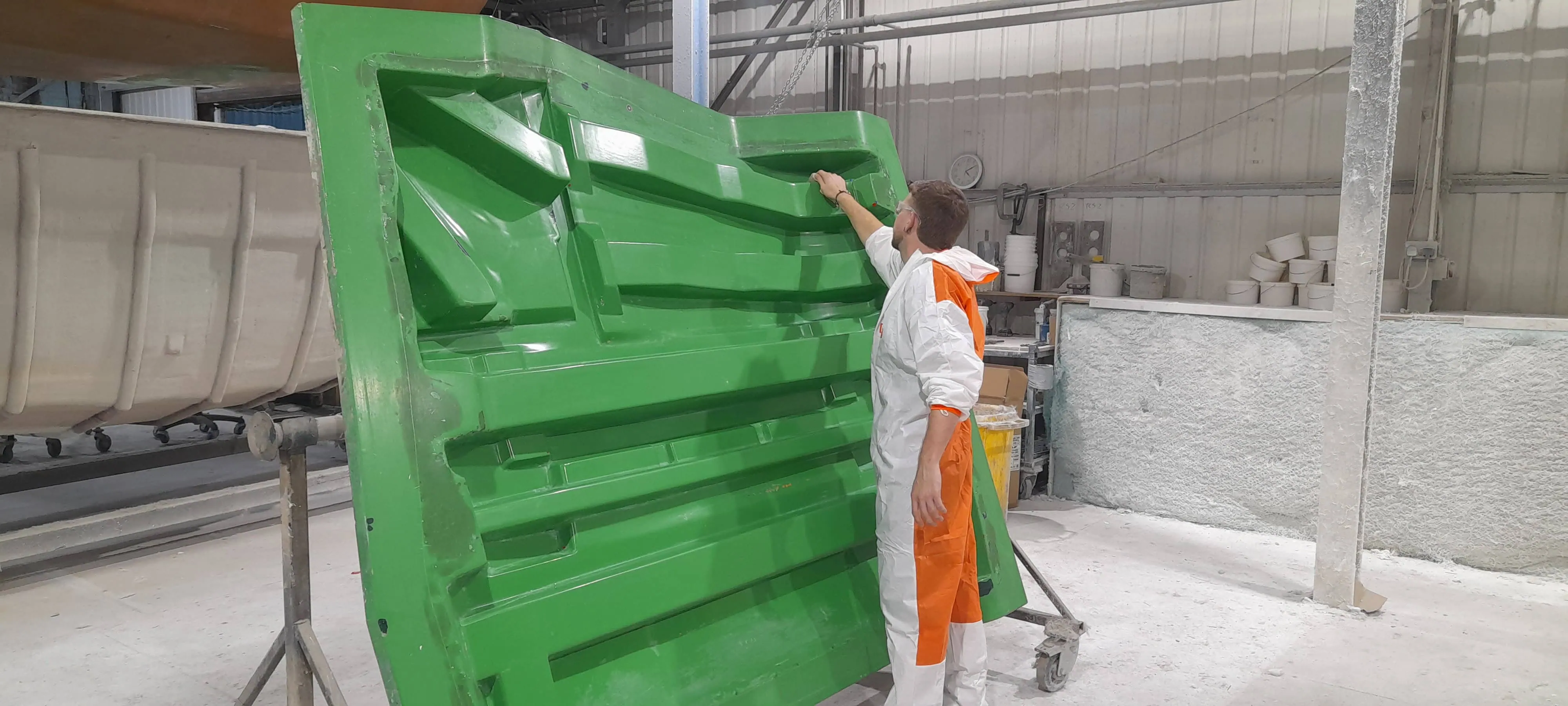
High quality moulds last longer and produce better quality parts, which in turn means less finishing on the parts, avoiding excess labour and the associated part costs.
With our extensive experience in fibreglass mould making, we cannot overstate the importance of paying attention to moulds at the earliest stages of part design.
Mould quality is critical to part quality, directly impacting surface finish, dimensional accuracy and repeatability. We encourage all customers to involve us in designing their moulds to support the lowest project cost. |
Our philosophy regarding moulds at Quantum is simple:
‘Polish one mould, not a thousand parts’ |
|
|
Carefully Considered Fibreglass Mould-Making
Design for manufacture is essential to making a high-quality, cost-effective part every time.
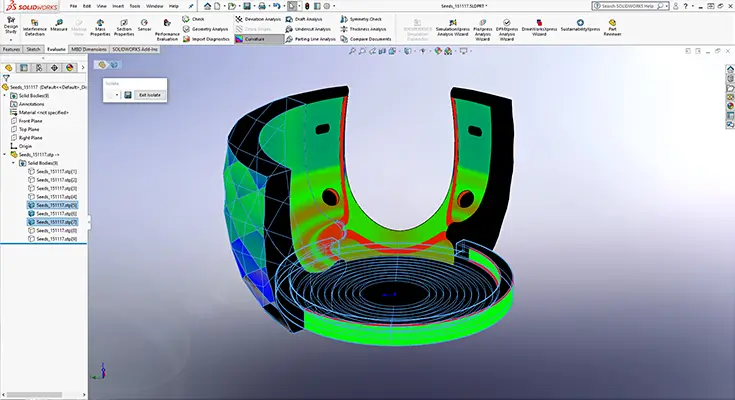
We carefully consider release angles, positioning of split lines, size, geometry, tolerances, specified finish and expected production volumes, to optimise part quality and streamline per-part manufacturing costs.
Our tooling design also accounts for the production method and end-use performance requirements. Considering all this reduces scrap rates and rework, and improves production efficiency. |
Tooling Differs Depending on Manufacturing Method
Variation in tooling supports different lamination processes.
- Hand laying needs easily supported moulds for operator access and precision
- Spray lay moulds are typically larger and more open
- RTM requires two moulds per part as it's a closed-mould process
- For assembly-critical mouldings, tooling includes location markers
- Material choices are based on the required surface preparation and finish
|
|
Composite Tooling Methods
Hand-made Moulds
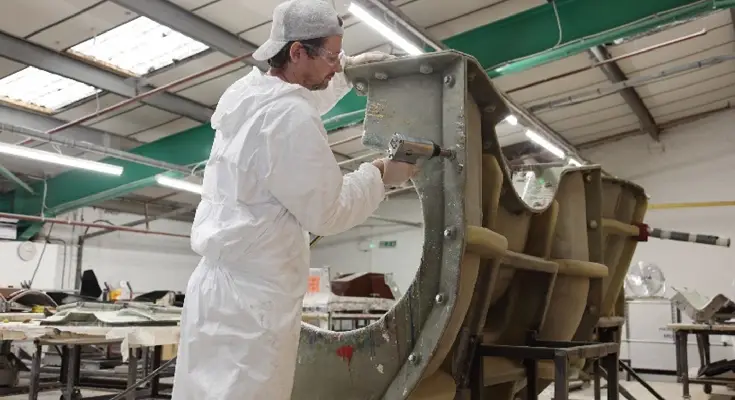
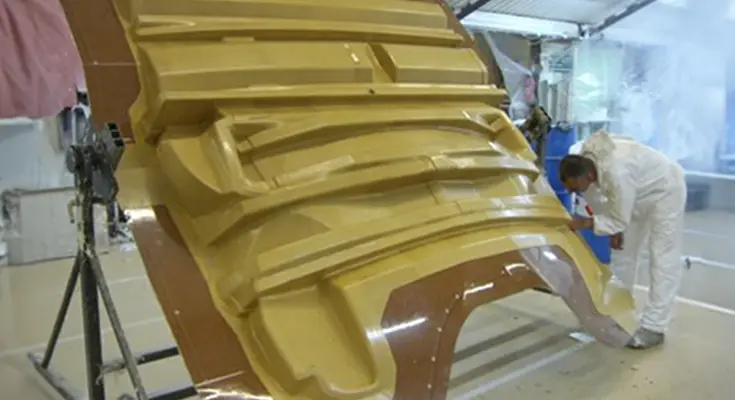
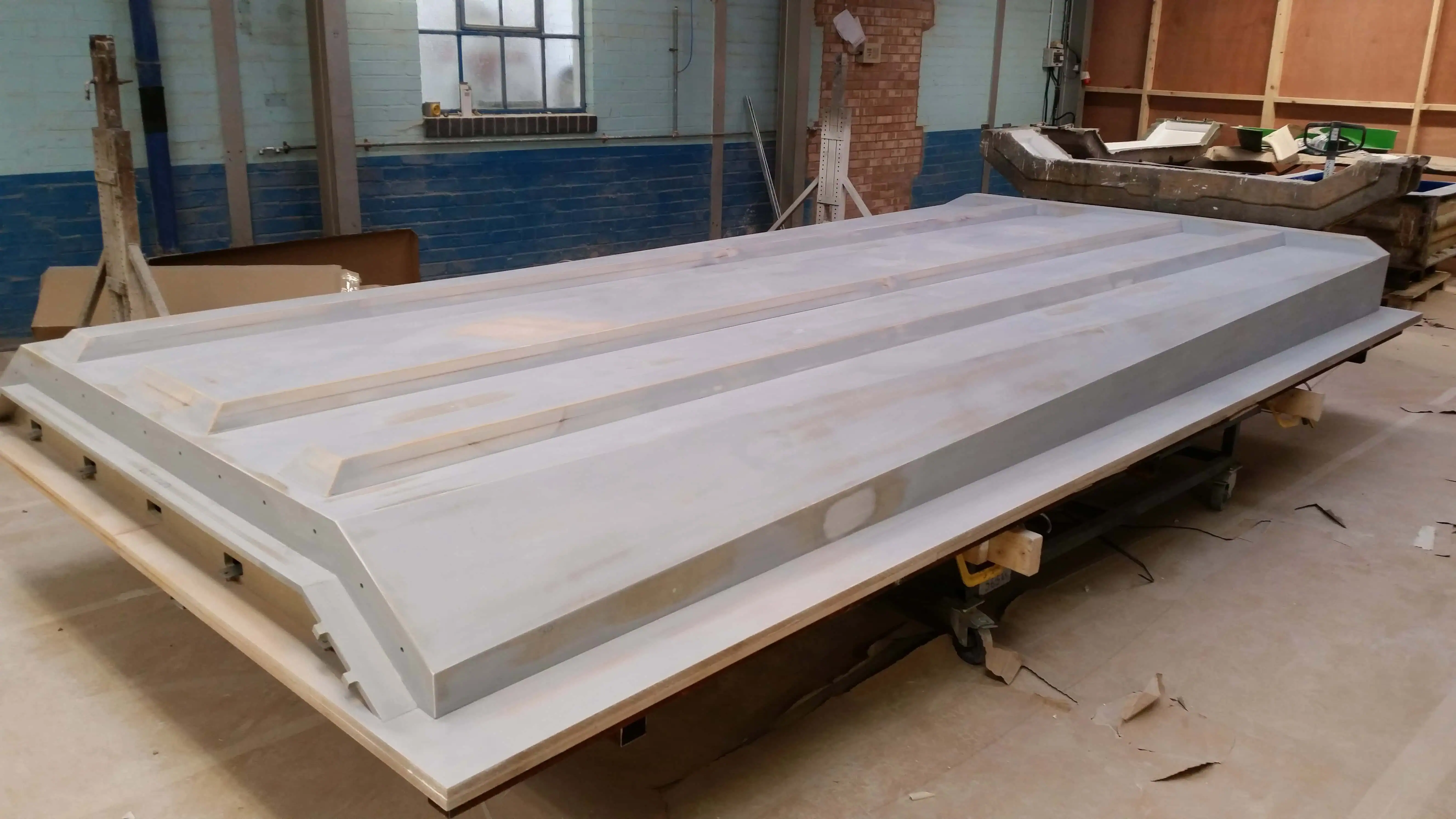
Our moulds are normally hand-made from a plug or a pattern. Where there are no patterns available, but a part is available, we can reinforce the part and add flanges to create a “plug” on which to base the mould.
A plug is not as accurate as a CNC machined pattern. Simple patterns can also be made from wood, MDF or other similar options. |
CNC Patterns
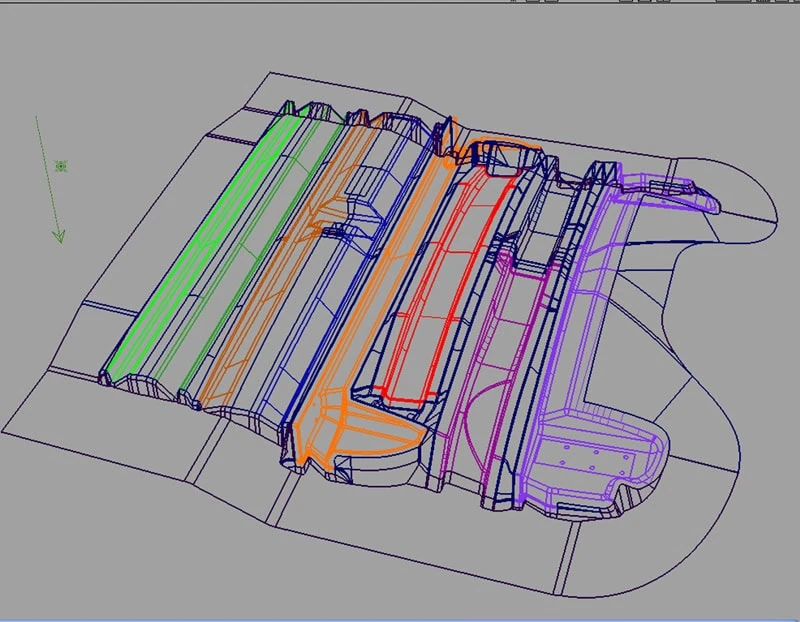
For higher precision parts, we recommend CNC machined patterns. We use these to make moulds that have precise dimensions and allow for more complex shapes and features.
3D-Printed patterns
As an emerging solution, we also have the capabilities to make smaller moulds from 3D printed models. These can be hand finished using conventional techniques. |
|
|
Built for Accurate & Repeatable Moulding
Some may consider it ‘over-engineering’, but experience has demonstrated that substantial mould construction and support are key factors in part consistency, tolerance control and manufacturing cycle times.
Using precise mould locators ensures that the different parts of split moulds fit exactly during assembly, with high repeatability.
Reinforcing the mould with wood or steel minimises any movement when making the parts, guaranteeing consistency, time and time again. |
Ongoing Maintenance
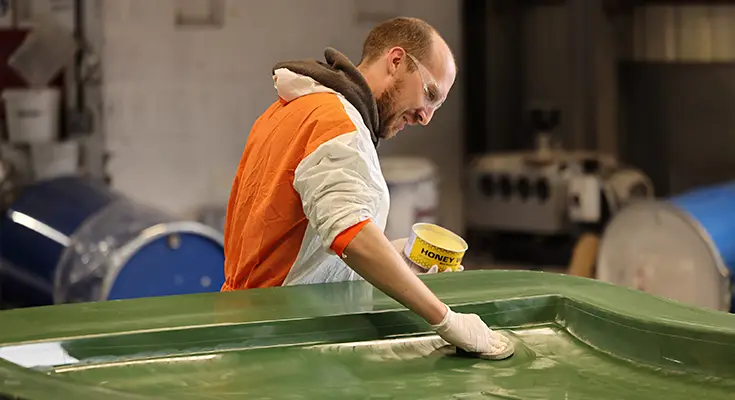
Mould maintenance is an important part of our quality assurance: from keeping the surface smooth and defect free, to regular cleaning and waxing.
This is particularly important as the quality of the part is a direct reflection of the surface of the mould.
Moulds are routinely taken out of production to be repaired or polished back to a high gloss. This makes sure that the parts they produce need the minimum of work once made. |
|
|
|
First-off Inspection
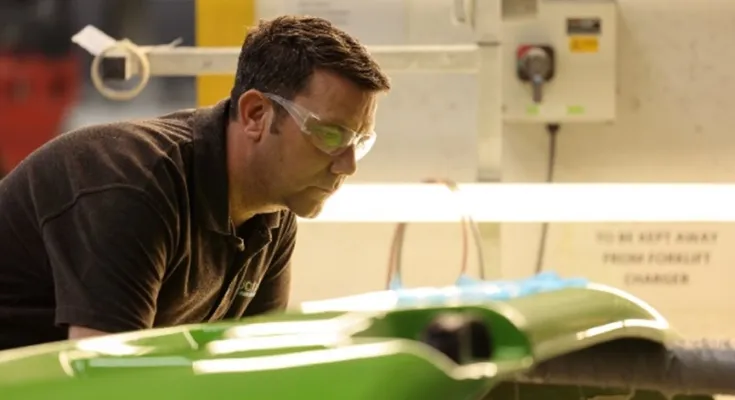
Inspecting the first-off part on every new mould happens before full production begins. With rigorous dimensional checking against the CAD model and surface-finish control, we make certain the mould will produce parts to tolerance and cosmetic specifications.
Our quality assurance process includes our fibreglass tooling to guarantee repeatability and quality throughout the mould's lifespan. |
Integration with Engineering & Manufacturing
With qualified engineering input, our GRP tooling is highly reliable. Tool design never exists in isolation at Quantum Mouldings; it is a continuously informed process.
Our engineers provide essential specifications and DFM input, and we integrate feedback from our manufacturing and laminating teams to verify that the moulds fit the chosen production processes.
Through collaboration, tooling is optimised for every stage, from lamination through to trimming and finishing, avoiding the costly disconnect between tool design and production reality. |
|
Our Composite Tooling Journey
1. Consultation
We begin by understanding your project requirements, assessing feasibility, and defining the optimal approach for your composite mould tools.
2. DFM Review
A thorough Design for Manufacture review establishes your geometry is fully optimised. Explore our manufacturing support capabilities.
3. Tooling Concept & Construction
We meticulously design and build robust fibreglass tooling, ensuring absolute precision and long-term durability for your specific project requirements. |
4. Trial / First-Off
Initial parts are carefully extracted and inspected to completely validate the fibreglass mould making accuracy before full production commences.
5. Production Support
We closely monitor the tooling's performance during active GRP moulding runs to guarantee efficient cycles and highly consistent quality.
6. Mould Maintenance
Routine care and expert modifications actively prolong the lifespan of your composite tooling, keeping your production schedules completely on track. |
|
|
When Specialist Mould Making Is Critical
Our GRP mould tools provide the most value for our customers when precision and reliability are non-negotiable. Investing in expert fibreglass mould making is essential for projects involving:
- Complex or large-format parts
- High cosmetic finish requirements
- Tight tolerances
- Repeated production runs
- Scaling from prototype to production
Professional tooling leads to superior surface finishes, exact dimensions, and the durability needed for long-term project success. |
Partnering with Quantum
We take a moulding-first approach to composite tooling. Our custom GRP mould tools allow us to efficiently produce both bespoke and high-volume fibreglass components. Rather than just building a mould, our focus is on long-term moulding performance for reliable yields and consistent quality for your products, run after run. |
|
|
|
Discuss Your Moulding & Tooling Requirements
Whether you are launching a new product or redesigning an existing component, engaging with us early prevents costly mistakes later. Ensuring the correct mould tooling for composite manufacturing requires careful planning from day one.
Let's discuss your project to best understand your needs to determine the most effective approach for your project.
Start the Conversation |