FAQs
What GRP Manufacturing processes do you offer?
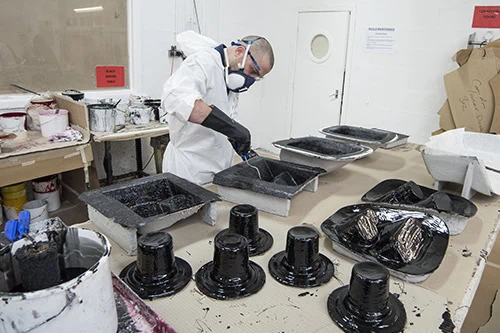
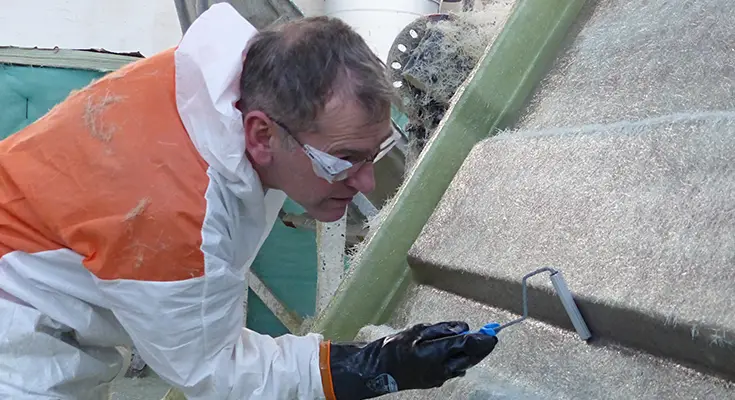
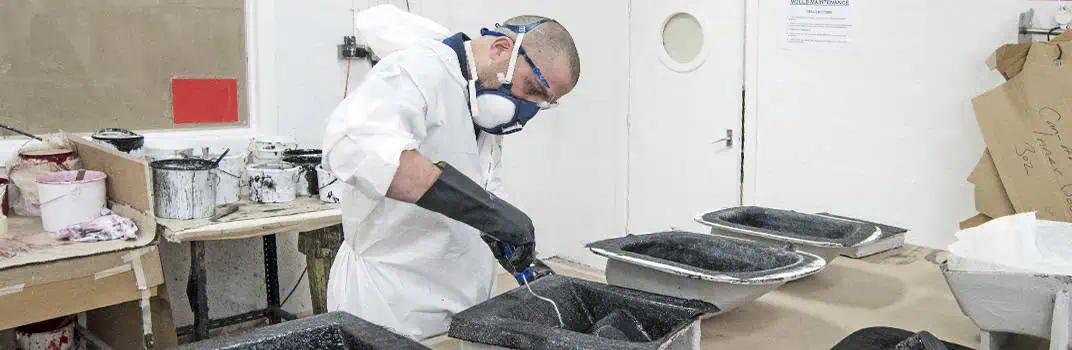
For complex parts and typically small batches, we use a hand-laying technique.
Spray lay lamination is used for larger, open shapes to increase efficiency.
Where parts require more consistent weight and thickness, internal layers such as foam or a smooth internal surface finish, we use RTM Lite, our closed-mould GRP technique.
Once parts are removed from the mould, we trim the excess, either by hand or using a CNC robotic machine.
Do you have minimum order quantities (MOQs)?
We are a volume manufacturer, and generally accept projects turning moulds at least 100+ times per year. There are some exceptions to this rule if parts are small and simple, so we encourage you to contact us and see what is possible.
What part sizes and tolerances can you achieve?
We currently mould fibreglass parts as large as approximately 6m x 2.4m, down to 300mm3. We manufacture what we believe to be one of the largest RTM Lite parts in Europe!
During assembly, we can fit multiple large parts together if required.
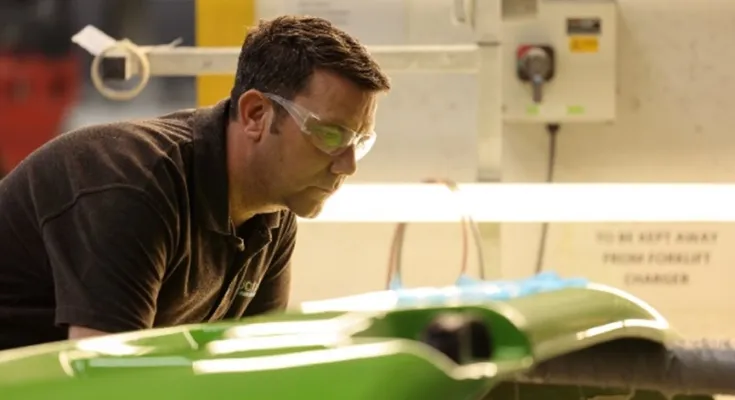
The tolerance achieved, whether dimensionally or as a finish, typically depends on geometry and manufacturing method. Early on, we’ll discuss:
- Realistic levels for cosmetic surfaces
- Critical-to-quality dimensions and inspection method before manufacture
Do you offer on-site support, installation, or assembly?
Our on-site support is typically at the early stage of the project, to assist with developing your design and optimising it for manufacturing. This supports repeatability and part consistency.
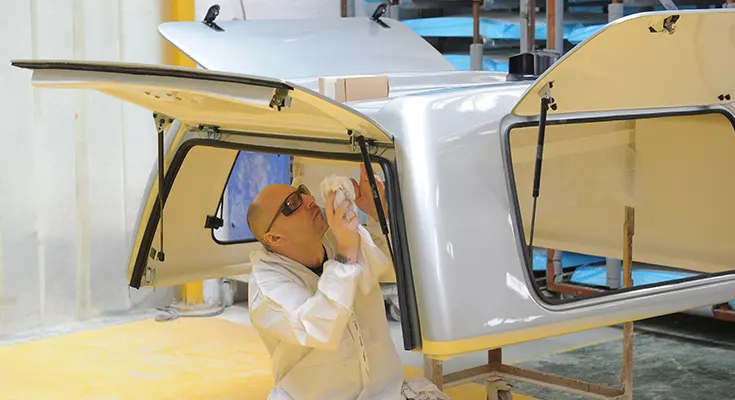
We provide post-manufacturing assembly and sub-assembly, adding fittings and features such as hinges or trims.
What are typical lead times?
Our lead times depend on the project. Typically, we can produce a prototype within 3 months of your accepting the quote. In some cases, higher quality and complexity requirements can lead to longer development phases. We will always discuss projected lead times with you, so there are no surprises.