GRP Body Panels: How Durable Are They, Really?
Machine covers, enclosures and body panels made from GRP are common on industrial equipment because they can be built to last. But durability isn't automatic. How long a part actually holds up depends on the layup, the gelcoat and the environment it's designed for, not on the material label alone.
Why Durability Matters for Machine Covers
GRP Machine covers and enclosures protect equipment that's often expensive to replace and disruptive to lose to downtime. A cover needs to do more than look good on day one. Depending on how it's specified, GRP can be built to handle years of exposure, impact and handling in workshop, agricultural or outdoor settings. The layup and gelcoat choice, not the material alone, is what decides whether a part still performs after five or fifteen years.
How Strong Is GRP, Really
Strength-to-weight ratio is often the headline claim for GRP, and it can be a genuine advantage: a well-specified laminate can match or exceed steel's strength at a fraction of the weight. But that isn't a fixed property.
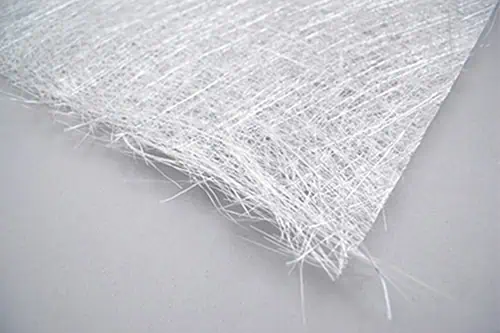
Strength depends on the glass content, the resin system, and how many layers go into the laminate. A thin, lightly built panel won't perform the same as a thicker, reinforced one.1 Where strength matters, it needs to be designed in and specified, not assumed.
What Actually Causes Wear and Degradation
Most materials degrade eventually, and GRP is no exception. UV exposure can fade or chalk a gelcoat surface over time, but UV-stable gelcoats and additives can slow this considerably.2
Chemical exposure, solvents or harsh cleaning agents, can dull or damage a surface that wasn't designed to resist them.4 Poor handling or storage before installation can also cause cracking. None of this is unique to GRP, but it does mean durability requirements should always be considered at the earliest stage. This is typically solved by asking a simple question, such as “What environment is the composite designed for?”
Corrosion, Weather and Chemical Resistance
GRP doesn't rust the way steel does.4 That said, chemical resistance and weatherproofing aren't blanket guarantees. Resin systems vary in how well they cope with specific chemicals, and a specification chosen for general workshop use may not suit a heavy washdown or coastal environment.5 It's worth confirming the intended environment before assuming a standard laminate will cope with it.
Load-Bearing and Structural Performance
GRP's light weight sometimes leads to the assumption it can't take heavy loads, but that isn't necessarily true. Load-bearing capability depends on laminate thickness, core materials and how the part is engineered, not on the material being "GRP" in general terms.1 A panel designed as a lightweight cosmetic cover will behave very differently under load to one engineered as a structural component. Specify what load a part actually needs to carry at the design stage to get the best results.
How Long Does a GRP Cover Actually Last
Some GRP products in long-running applications, boat hulls, roofing, ponds, have stayed serviceable for decades.3 That track record is encouraging, but it isn't a guarantee for every part. Service life depends on the same variables above (design, gelcoat, environment) plus how well the part is maintained. A realistic answer is that a properly specified GRP cover can outlast the equipment it protects.
Is It Worth It?
This is a fair question, and one that comes up often when buyers compare GRP against steel or moulded plastic. The honest answer is that it depends on the application. For low-volume, complex or outdoor-exposed parts, GRP's low maintenance and long service life can offset a higher unit cost over time. For very high-impact applications, or very simple high-volume parts, another material might suit better. A conversation about the specific part and environment is more useful than a blanket answer either way.

Talk to Quantum About Your Machine Cover Production
Every property discussed above, strength, weather resistance, load capacity, lifespan, is a design decision, not a fixed guarantee. Quantum works with customers to specify the layup, gelcoat and finish that actually suit the equipment, environment and budget involved.
Discuss your machine cover or enclosure requirements
FAQ
Does GRP rust or corrode?
No, GRP does not rust or corrode the way steel does, though resin choice still affects chemical resistance in specific environments.3
How long does a GRP machine cover last?
With an appropriate gelcoat and layup for the environment, many GRP parts remain serviceable for decades. This depends on specification and maintenance, not the material alone.2
Is GRP strong enough for load-bearing parts?
Yes, when the laminate thickness and reinforcement are engineered for the load. A lightweight cosmetic layup will not perform the same as a structural one.1
Resources
- Sathishkumar, T.P., Satheeshkumar, S. and Naveen, J. (2014) 'Glass fiber-reinforced polymer composites – a review', Journal of Reinforced Plastics and Composites, 33(13), pp. 1258–1275. Available at: [https://www.researchgate.net/publication/318599258_Mechanical_properties_of_glass_fiber_reinforced_polyester_composites] (Accessed: 24 September 2026).
- Signor, A.W., VanLandingham, M.R. and Chin, J.W. (2003) 'Effects of ultraviolet radiation exposure on vinyl ester resins: characterization of chemical, physical and mechanical damage', Polymer Degradation and Stability, 79(2), pp. 359–368. Available at: [https://www.sciencedirect.com/science/article/abs/pii/S0142941815001026] (Accessed: 24 September 2026).
- Davies, P. and Rajapakse, Y.D.S. (eds.) (2014) Durability of composites in a marine environment. Dordrecht: Springer. Referenced via: 'Sustainability considerations for end-of-life fibre-reinforced plastic boats', Cleaner Waste Systems. Available at: [https://www.sciencedirect.com/science/article/pii/S2352485525000453] (Accessed: 24 September 2026).
- Ashter, S.A. (2014) 'External corrosion behaviour of steel/GFRP composite pipes in harsh conditions', Materials, 14(21), 6501. Available at: [https://www.mdpi.com/1996-1944/14/21/6501] (Accessed: 24 September 2026).
- Visco, A.M., Calabrese, L. and Cianciafara, P. (2008) 'Comparison of seawater absorption properties of thermoset resins based composites', Composites Part A: Applied Science and Manufacturing, 39(5), pp. 805–814. Available at: [https://www.sciencedirect.com/science/article/abs/pii/S1359835X10002770] (Accessed: 24 September 2026).